Insights & Strategy Consulting
We help companies and customers understand each other
Consumer-grade empathy. Business-grade rigor.
We help get out of your own world and into the world of your customer — and make sense of what you find there.
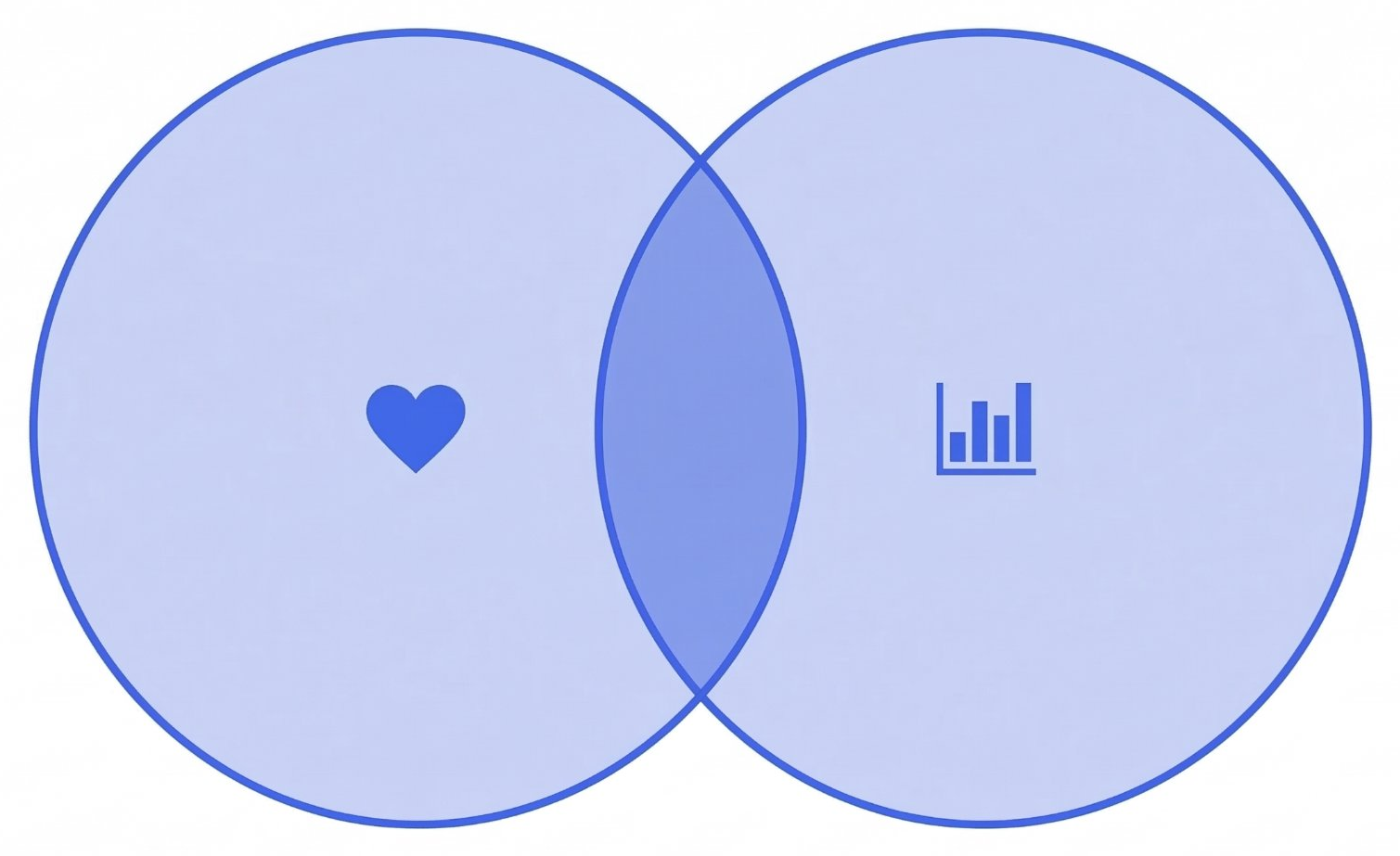
Consumer-grade empathy. Business-grade rigor.
We help get out of your own world and into the world of your customer — and make sense of what you find there.
Most insights consultants specialize in either business audiences or consumers. We think that creates blind spots.
Business buyers aren't hyper-rational box-checkers. Consumers don't always buy on impulse. And people don't stop being human when they walk into an office.
Because we've worked in both worlds, we know it's always real people making the call. And people bring brilliance and baggage to every decision.
We bring consumer-grade empathy to business decisions and business-grade rigor to consumer insights. We understand organizations as cultures with their own family dynamics, languages, rituals and power structures. We also know emotional advertising still needs to explain products that deliver real functional benefits.
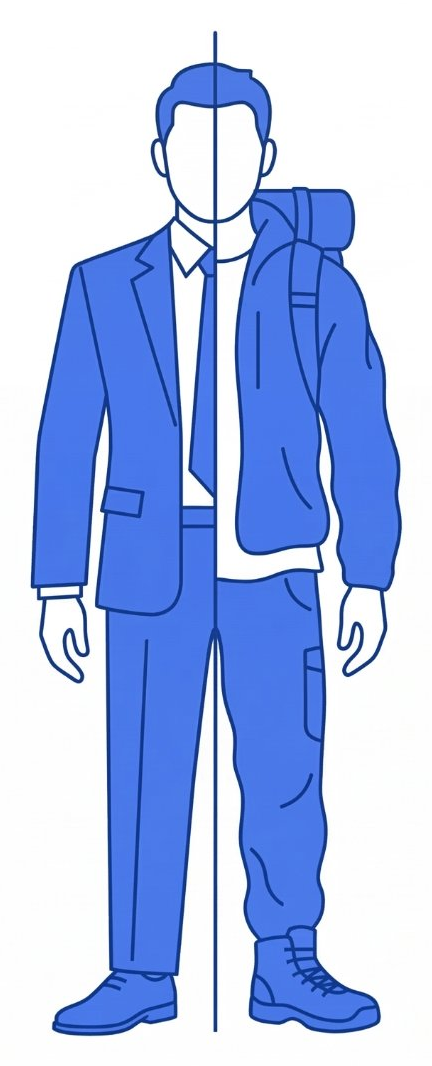
Whether it's someone buying your product or a CIO betting on your technology, it's still a person making a choice. And people don't make choices in spreadsheets. They bring their whole messy, human selves. Logic matters. Emotions matter too. So we study both.
Before you can influence a decision, you need to know who's making it and what they actually care about.
Stop guessing at your best prospects. Figure out the patterns that separate buyers from browsers.
Get everyone aligned on who you're serving. Real motivations, actual blockers, trusted channels.
See yourself through your buyers' eyes. Where you win, where you lose, where you can credibly differentiate.
Replace assumptions with real behavior. How people actually solve problems in your space.
Watch real work happen. The workflows, workarounds, and pain points that don't show up in surveys.
Compress your learning curve with advice from people who've been there.
Understanding what pushes someone from 'curious' to 'yes'.
Think you can vibe code your way to a production ready product? Test before you build. Figure out what works and what needs fixing.
See if a bet is worth making. Market size, adoption curves, the drivers that matter.
Focus your roadmap on what actually moves the needle.
Understand the path from awareness to advocacy. Where do people get stuck, what moves them forward, what makes them bail.
Find the sweet spot where the value you deliver meets their willingness to pay.
Turn features into offers that make sense to buyers.
In the right moment, the right message can change everything.
Get aligned before you get creative. Build and pressure-test the foundational structure that guides all your communications, then craft the story that brings it to life.
Make sure your words actually land. What resonates, what confuses, how to say it better.
Don't waste media spend on work that won't perform. See if it will and learn how you might save it if it doesn't.
Build authority that creates air cover for your sales and product teams.
Lift conversion across calls, demos, and presentations.
'I do' does not mean 'until death do us part.' Understand what happens after someone says yes (and why some say goodbye).
Stop revenue leak. Early warning signs and which interventions actually work.
Design experiences that move people forward instead of creating friction.
Keep a pulse on what's working and what needs attention.
Know which levers actually move your business metrics.

I've spent twenty years helping companies decode their customers — how they process information, what drives their decisions, and how they actually navigate choices — and then apply that understanding toward better products, better stories, and smarter bets.
I've done this work at startups going through their first growth spurts and at platforms with billions of users. I've helped teams launch new products, reposition old ones, navigate crises, and tell better stories. The scale changes, but the core challenge stays the same: how do you cut through all the noise to find the signal that matters?
That's where the name comes from. We live in an age where AI and technology can produce content, data, and insights faster than ever before. But human attention remains stubbornly finite. The ability to consume and actually process all that information hasn't scaled with our ability to create it.
This is where craft becomes essential. Not craft as in artisanal small-batch consulting, but craft as in the careful work of separating what matters from what doesn't. Of finding the patterns that drive decisions. Of turning insights into action.
Technology has always been central to my practice (and always will be), but I believe deeply that making meaning is fundamentally a human process. You can't regress your way to understanding. You can't optimize your way to insight. You can't model your way to real connection with your customers. The algorithms can process the data, but humans have to make sense of what it means.
I started my career at Wired in the '90s studying how people actually respond to online advertising. Since then, I've built research teams, launched new practices, and helped executive teams make better decisions with better information.
Tell us about the challenge. We'll tell you honestly whether we're the right fit.